 CIRP
Research / Physics-Informed AI for Scientific Instrumentation / Predicting instrument response
ML-Driven Surrogate Modeling for FEL Oscillator Cavity Optimization
We build surrogate models to speed up simulations of free-electron laser oscillators and help researchers tune the laser cavity.
Project overview
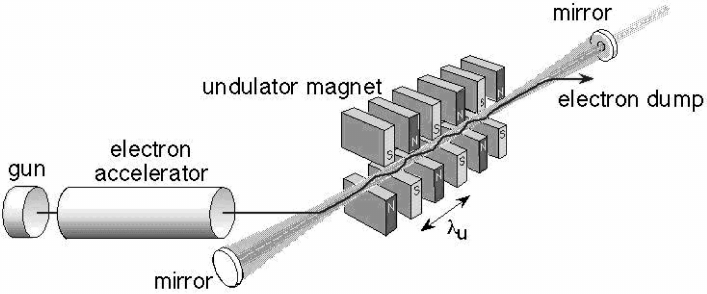
Testing a range of cavity designs in a simulator such as GINGER can take considerable computing time. We’re training models to predict how changes in mirror spacing and cavity length affect the electron beam energy and the radiation it produces. If the models can replace some full simulation sweeps, researchers could compare designs faster and tune the laser’s gain, stability, and spectrum in real time.
Project team
Project lead
Ethan Chung
Principal investigator
Huaijin Chen